Sunday, June 20, 2010

What would YOU do?


Arizona, like many western states, sees a number of animal attacks every year. Most of these can be attributed to rabies, as opposed to aggressive behavior or hunger, and as the weather gets warmer the rabid animals really start to show up.

Last year in this area we had two rabid fox attacks in February, a rabid bobcat attack in March ("so this bobcat walks into a bar . . ."), and another rabid bobcat attack in April. Following in late 2009 would be a man who strangled a bobcat to death when the rabid animal jumped him while the man hooked up his boat at a local lake. Every person in every attack I just listed reacted differently; some with fear, some with determination, some with stupidity. This year is looking to be no different.

Nearly two weeks ago a man in Walker, just up the road from my town of Prescott Valley, was allegedly attacked by a mountain lion when he went outside to turn off his water after dark. You can read the story here and then read the aftermath and killing of a nearby mountain lion here. I say that he was allegedly attacked because Arizona Game and Fish Wildlife Managers were unable to determine whether or not a mountain lion had attacked him at his home. The man's injuries and the lion's behavior were also not consistant with a mountain lion attack; however I can do nothing but believe the man's story since I was not there when it happened. Aside from that and assuming that it really happened the way the man says, he made a fatal error when he encountered the lion - he turned and ran for his house. Bad move. An animal's predatory instinct will nearly always be triggered when you turn and run like a typical prey animal, and if the animal has rabies then it will make it that much worse since the animal's aggression will be much higher than normal, and the regard for its own safety will be lower than normal. Running may be an option if you are mere feet from your house or car, but if the animal is closer to you than you are to safety, then you're probably not going to make it if it decides to attack.

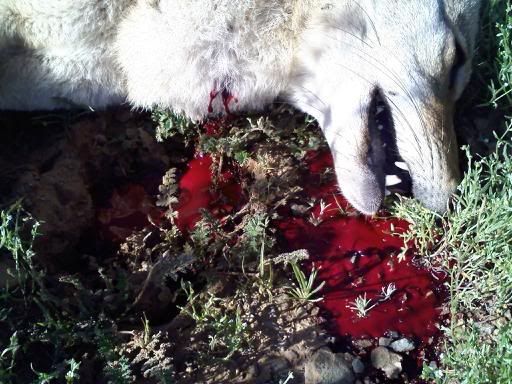
It is as of yet unknown if this lion was rabid, but whatever the animal's health you need to stand your ground and make yourself to appear as large as possible. Put your arms out, wave them, and get loud. If you can appear more menacing and dangerous than they are, then you will often frighten them away. This may not be the case if they are rabid, however, as they will often not retreat and may become more aggressive, attacking without warning. A rabid animal will appear confused, lethargic, and may be heavily panting or growling. Nocturnal animals, such as foxes, will become suddenly active in the daytime, and their fear of humans will be all but gone. If you find yourself squaring off with a rabid animal, then your best option is to fight. Running, as we've already determined, is not an option. If you have a firearm, then prepare to use it, but if you lack a firearm then you need to find a weapon. A knife, a rock, even a big stick will enable you to defend yourself if needed. First-aid scissors or a writing pen may be used as improvised weapons if you have them in your pack or in your pockets - even your pack itself may be used as a weapon or as a shield.

Our first official rabid animal attack for this year in Yavapai County comes from Cottonwood, a town just a half hour away from where I live. You can read the news story here about the fox who attacked a woman after attempting to attack two other people nearby and then being fended off with a clipboard by a UPS driver. There may or may not have been anything this woman could have done to avoid being bitten, as it seems the fox caught her by surprise. However, the woman's husband said that they knew the fox was active next door and that it had begun to act strangely the last few days. Had they called animal control with that observation, his wife could have avoided a nasty situation and the joy that is the rabies vaccine treatment.

My point here is that you need to maintain situational awareness when you are in the outdoors or even in your own neighborhood. Wildlife, and especially predators, can adapt easily to living amongst humans, and we need to be aware of their activity and their behavior. Bats, skunks, raccoons, and household pets are the most common carriers of rabies, a virus for which there is no cure. There are prevention measures and certainly there is a vaccine which can eliminate rabies if given within the incubation period, and you should always seek treatment immediately if you feel you've been bitten by a rabid animal. It is especially important to inform your kids about the possibility of rabid animals and what they should do if they think they encounter one.

You should never be scared to go into the outdoors, but you should always be informed about and prepared for what you may encounter.

Thursday, June 3, 2010

Something old into something new

This time of year, while I'm taking a hiatus from predator hunting, I find myself fishing with my kids, hiking with my buddies, and camping with my family. But the one thing concerning predator hunting that I am ALWAYS doing is thinking about and looking for gear. Be it better ammo, different calls, or a more efficient shoulder bag, I am constantly on the lookout for something new to try out. A great place to find new gear is at yard sales, which can be found aplenty throughout any town or city in America during these warm summer months. I recently picked up a new shoulder bag for $2, a buddy of mine just picked up a brand new ghillie suit for $80, and my Dad recently scored a tremendous deal: a Mossberg 500 12ga pump shotgun for $50!

I generally try to buy only lightly used or brand new equipment when I can, but sometimes, as in the case of my Dad's new shotgun, the deal was too good to pass up but the equipment was less than beautiful. The pump action was stiff and the chamber was filthy, but a little Hoppe's No.9 and some elbow grease fixed that problem, and soon my Dad had it working smooth as glass. A little stain and a good cleaning job on the wood stock and that was fixed as well, but the finish on the metal left a lot to be desired. Since I had painted a number of my own firearms and a few others for friends, my Dad turned the shotgun over to me for a little "Rizzo Pinestraw Paint" - and the results were pretty good.

I removed all the wood and sanded off all the rust, then wiped the whole thing down with alcohol. Normally I paint the stock as well, but my Dad wanted the contrast of the wood stock. I taped up everything that shouldn't have paint on it, like the action and chamber. Then out came the cans of Krylon Camo spray paint!


I started off with a base color of Khaki, and let it try for a good 10 minutes. The warmer the weather, the less dry time you'll need. Krylon dries especially quick, at any rate.


By applying small pine boughs and spraying through them, you can achieve a "pinestraw" look. Fake grass from a hobby store or an old straw broom will also work well. I applied the OD Green color second, then the Brown color after a 15 minute dry time, followed by a few spot touch-ups with Khaki.


Put it all back together and install the stock and voila! My Dad's got a great looking and great functioning predator hunting shotgun.


A can of this paint can go for around $5, but you can do a couple of firearms with each can and still have some left over. It's cheaper than Duracoat, and certainly cheaper than having it dipped or professionally painted. If you let it harden for about 24 hours before taking it out into the field then you'll get a good life span out of the paint. And when it starts to chip or wear off from use, just touch it up from the comfort of your garage!


To see more of my paint jobs, as well as get some design ideas from other hunters, and to read a full report on some other camo processes, please visit my thread on AR15.com, titled "The Disappearing Firearm". Then get your rattle can out and get to work!

Thursday, May 20, 2010

They Live Among Us!

If you're not hunting predators around urban areas, suburban housing developments, or farmland, then you're missing out on some prime hunting opportunities. As long as you are aware of local laws and regulations, and stay within them, you will find some exciting and plentiful new hunting areas where animals are rarely bothered and which are overlooked by most hunters. Every season I kill a lot of predators just outside the city limits, in the brushy washes outside of a rural community, and in the outlying fields of ranches and farmhouses. But more on that another time.

It seems that more and more predatory animals are coming in contact with humans. A lot of this contact can be attributed to rabid animals, such as the bobcat that walked into a local bar right here in Arizona (sounds like a good joke!) and attacked a man, or the bobcat that was strangled to death by a man locked in mortal combat with it near Lake Pleasant, AZ. But beyond rabies encounters, with which I have had a few, there are predators popping up more often in subdivisions and downtown areas. We all know that predator numbers need to be kept in check, otherwise you'll end up with too little prey, leading to reduced small game numbers, or starving and desperate predators which can lead to attacks on humans. As stewards of the land we need to ensure that all animals have a healthy environment in which to thrive. We are also humans with a will to expand, and as we expand into new territory we find ourselves displacing animals. While prey species may run and find new homes, predators act more like the U.S. Marines - they adapt, they improvise, and they overcome.

Most times when I see a coyote dash across the road in my neighborhood I can think of nothing else than the thrill of tracking it through the streets and narrow roadways until I finally get it in my sights. One night I chased a bobcat through the checkerboard layout of a local subdivision, moving as fast as I could in the moonlight as the cat zigged and zagged with ease around cookie-cutter houses. It finally leaped a 4 foot wall, landing in someone's backyard and thereby ending the game. On another occasion I was visiting family in Colorado. My brother-in-law and I were playing with our kids in a city park when a large red fox trotted by us in the grass, nice as could be but certainly bound for some other destination; apparently these kind of sightings are normal around the area. While these types of wildlife interactions are harmless and fun to see, especially for kids, they can lead to problems if not kept in check with proper animal management.

What leads to these animal and human contacts within what we consider our established territory? First of all, predators don't see property lines or city boundaries - they see opportunity and survival. Easy prey species living in peace within the confines a neighborhood, be it quail, squirrels, or house cats, are a tempting target and certainly worth the risk. Garbage left out, food scraps not disposed of properly, and a generally neutral stance towards predators within our neighborhoods are some of the other reasons that a predator will move in. A few years ago here in Arizona, coyotes became so emboldened by the lack of response to their aggression that they finally set up shop near the ninth hole of a major golf resort. The coyotes began chasing golfers off and prancing around like they owned the place, yet local residents balked at the idea of a "removal service" for the coyotes, preferring for "nature to take it's course". When the coyotes nearly bit a golfer, finally the resort relented and hired a removal technician, who took care of the problem using air guns and live traps. A more extreme example is a red fox who was allowed to cruise a neighborhood, taking small pets and chickens at will, because the homeowners didn't want to harm the fox; that problem was never resolved and continues to this day. "He's just doing what he needs to do to survive" is a phrase often stated by those who don't approve of a predator's actions but don't want him removed. Sometimes it can be done with live traps but let's face it, that just temporarily solves the problem or moves it into someone else's backyard. There are ways to effectively control predator numbers in urban environments, including creating an environment that is not hospitable to predators by keeping pets at hand, garbage contained, and not feeding wildlife. In my opinion one of the best ways to keep them in check, and a method which I have used to great success, is to hunt them where we can, as close as we can, and as often as we can.

We hunt them in the name of conservation, fur harvesting, and just good fun, but still they manage to escape us. And what's more, they thrive where other animals would run! This should teach us something about the capability of these animals, and gives us the opportunity to learn more about them. Observing them in the wild, far from houses and concrete, is a great way to learn their behavior, but do not pass up the chance to watch a coyote mousing in a field in the middle of town, or to watch an educated fox watch cars as they pass before crossing the road, or to see a bobcat stalk the bushes at the edge of a waterway downtown as he looks for lost pets and stray ducks. Every time you see a predator you should be watching and learning, observing everything about how they move, act and react so that you can apply that knowledge to your hunting setup. They never stop learning, so why should you?

I have a genuine interest in predators - of course I love to hunt them but I also love to study them. Discovering what makes them tick, how much they can endure and best of all where they can endure it never ceases to amaze and amuse me. Here are just a few examples of what my favorite quarry is capable of - I find it hard to believe that most of us could adapt and survive so easily and readily in their environment!

First up: A badger goes postal - on video!


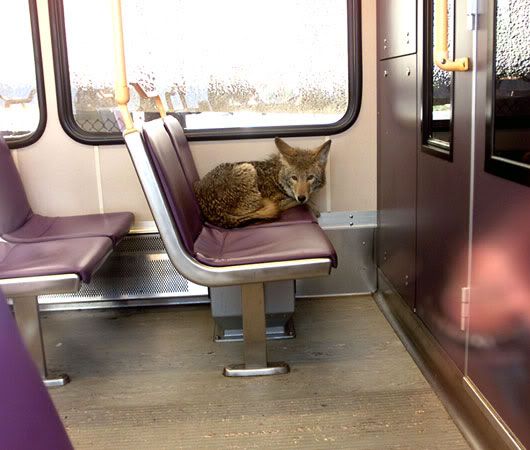
This wiley coyote caught the train in Portland after it was chased off the airport tarmac before being able to board a flight.


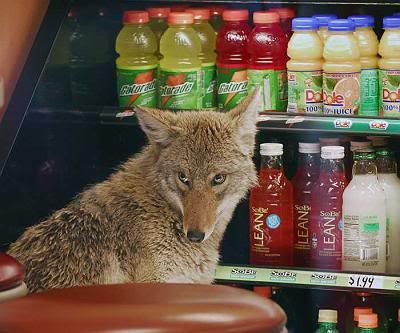
When it gets hot in Chicago the best place to be is the drink cooler at the local Quiznos sandwich shop.


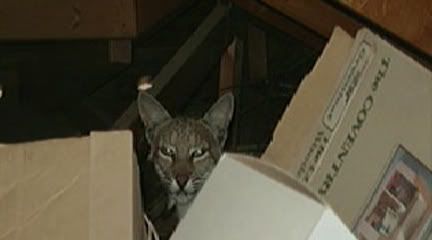
Having your kittens in a cave is for suckers - find a nice warm attic instead.


And if that attic happens to be on 'Wildcat Dr', all the better!


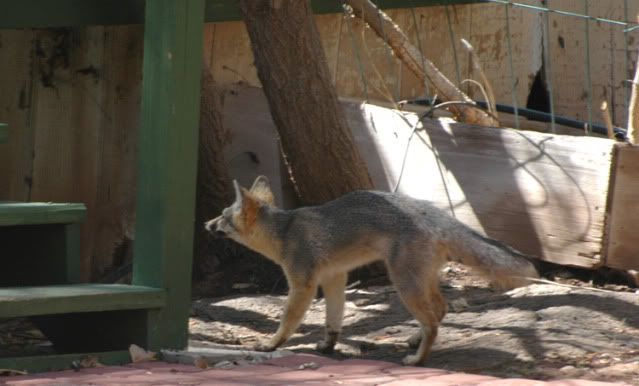
Running around in the brush chasing mice is hard work, but catching them underneath porches in a suburban backyard is much easier.


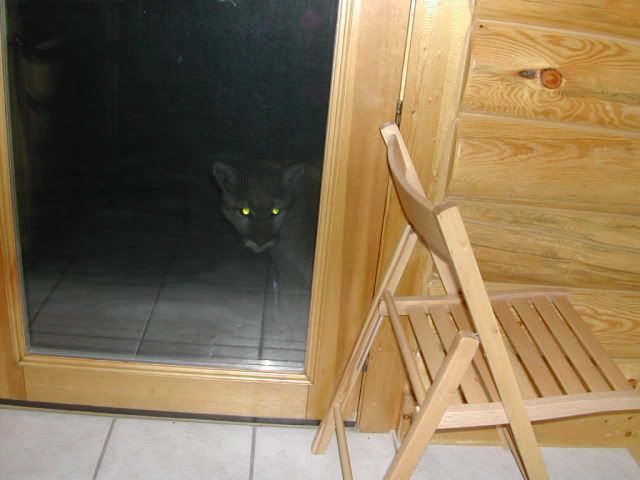
This mountain lion doing a horror movie 'peek-a-boo' through the back window is just one of the many reasons you should never leave your young kids unattended.


With all the wildlife, and especially predators, that we find ourselves living around on a daily basis, we have to do a little adapting ourselves. We need to pay attention to our surroundings and watch our pets, children, and where and how we dispose of our garbage. Be like Andy Samberg and team-up with wildlife in your local area and keep it wild - don't provide them with opportunities to become accustomed to living with humans. (WARNING: attempting to high-five a bobcat is not recommended, though it would be pretty cool.)

Wednesday, May 5, 2010

Oh what do I do in the summer time?

As most of you know I do not pursue coyotes during the summer time even though Arizona has a year-round coyote season. Other predators are now out of season, but coyotes are always available for hunting here. There are many ideas from many different hunters on this topic, and whatever you do I'm sure you have a good reason for it. I will hunt coyotes at a rancher's request or during antelope fawning periods during the spring and summer, but other than that I leave them alone until August. This allows the pups plenty of time to grow and gives me more targets for next season - not to mention that it's gettting hot out there right now!

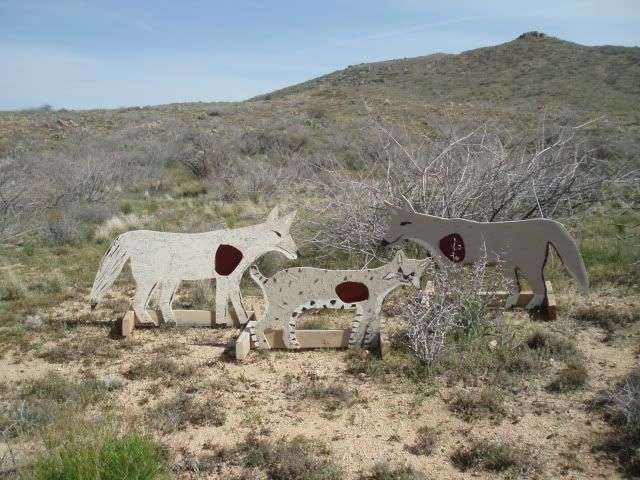
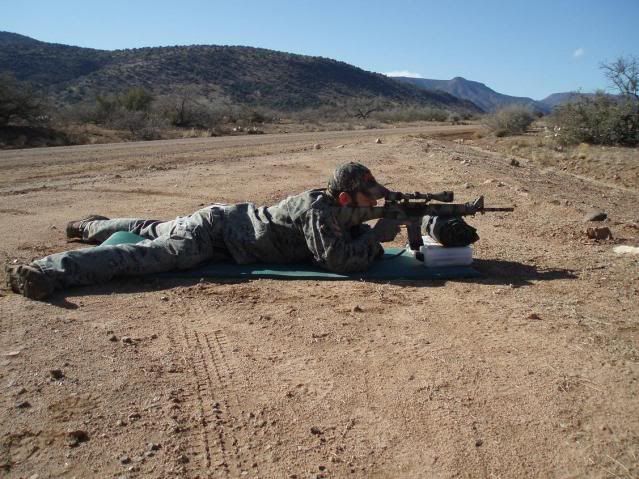
With all that said, I often find myself in a discussion with other hunters about what I do during the summer time to prepare for the next predator season. Well where do I begin?! There's equipment to maintain, rifles to clean, calls to practice with, new terrain to scout, staying in contact with my hunting buddies, and my personal favorite, shooting! Staying well-practiced with your chosen firearms is a necessity for making quick and well-placed shots next season. Whether you choose shooting paper, steel targets, or soda cans, you should be spending a good portion of your range time focused on quick and accurate shooting. I prefer a mixture of all of them, so I utilize life-sized animal targets, steel swingers, and paper targets when I go shooting.


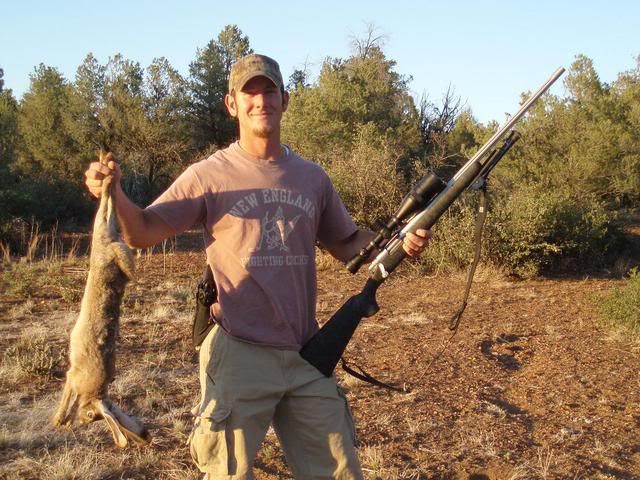
However, it's my opinion that nothing can beat the fast paced shooting that you can get while hunting rabbits! You'll need to check your local hunting regulations to make sure that you are within the correct season, but here in Arizona we have a year-round season on rabbits. If you can place a precision shot on a small game animal at long ranges or while they are on the run, then you will find that making clean kills on predators when the season rolls around will be a snap. Focus on making one-shot kills and shooting from different positions. Practice moving quietly through the brush and spotting them hiding in the brushlines (just like a predator will do). Try out any new gear that you'll want to use next season, such as ghillie suits, packs, or rifle slings. This type of hunting is a perfect way to field test your gear, practice your shooting, and have a good time doing it.


So don't just sit around in the A/C all summer - get out there and get ready for anything! And with warmer temps and beautiful days, don't forget to take a kid out into the field with you!

Boy Scouts and Scout Camp

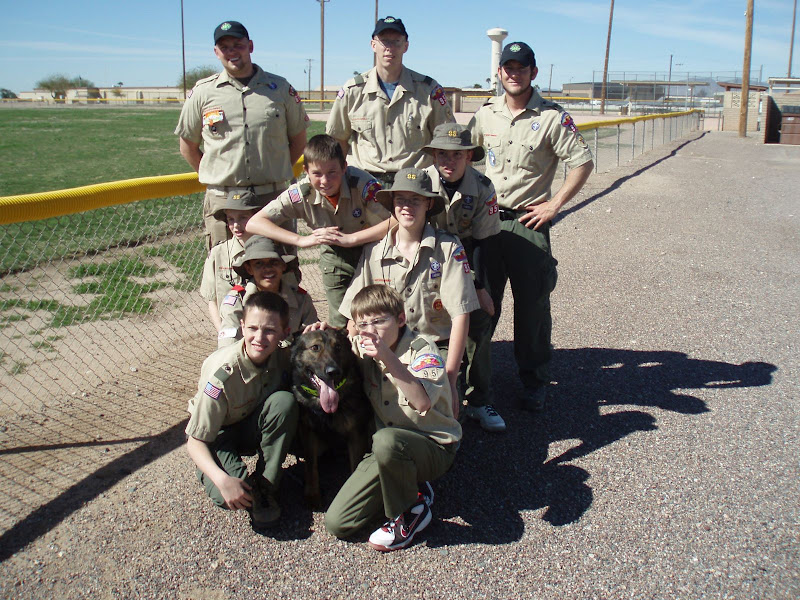
I am the Scoutmaster for Boy Scout Troop 95, and this year we will be attending a special Scout Camp at the Grand Canyon - we are really excited about it! The Scouts are doing a fundraiser for this weeklong event by selling shirts. These shirts are really awesome! Please check them out at our Online Ordering Site. When you order your shirts please put "Rizzo" in the "Special Instructions to Merchant" field when you are about to checkout. And please visit our Troop Blog to see what we're all about and what we've been up to.

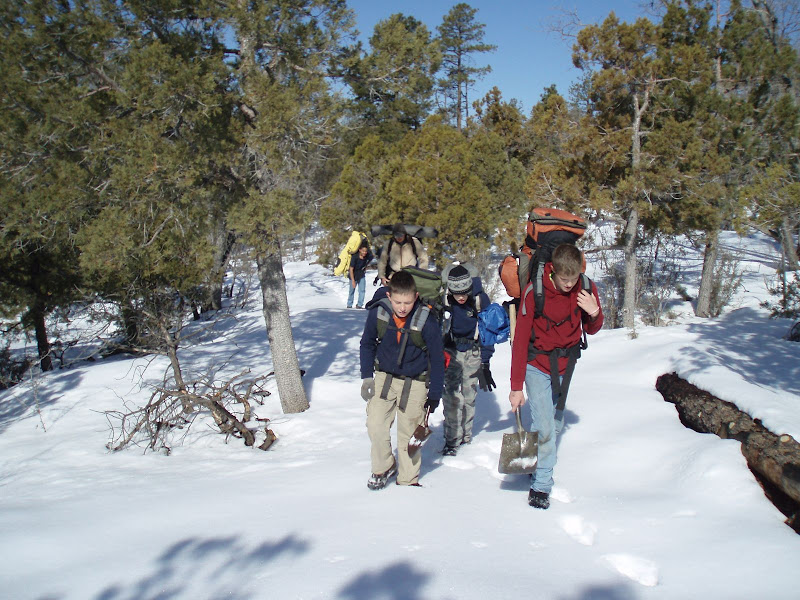
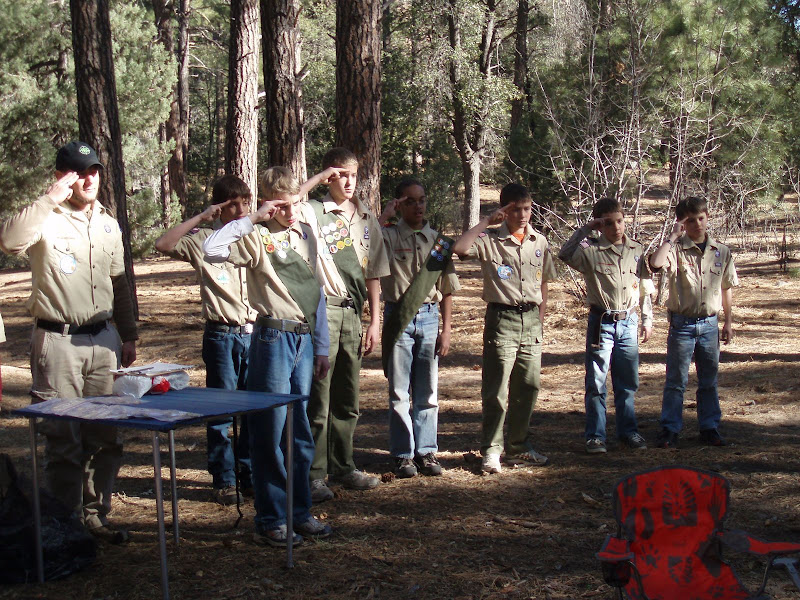
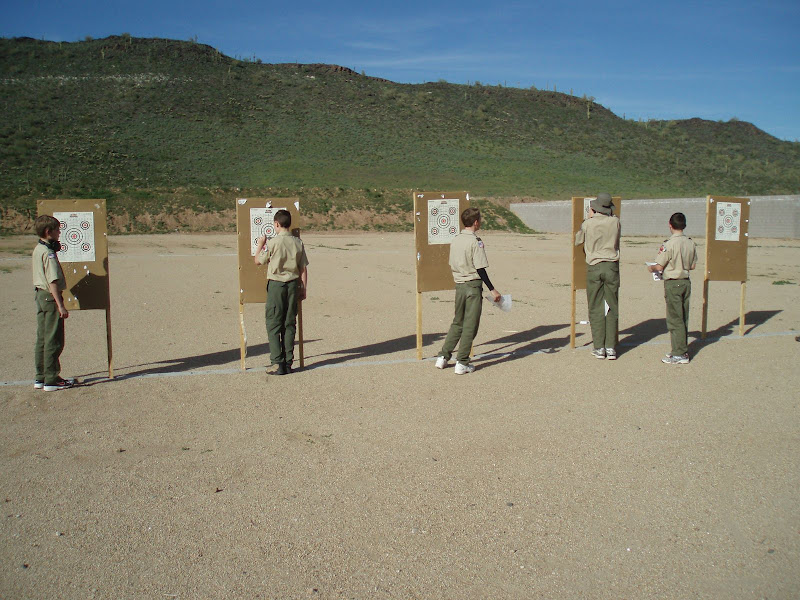
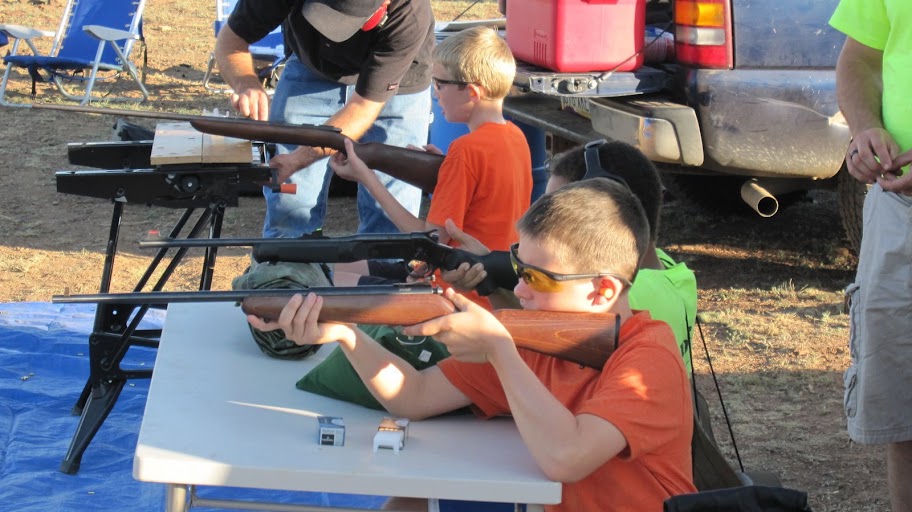
We are a very active Troop with a huge focus on the outdoors, so please help us get to Scout Camp! Here are some of the cool things we've been up to lately:


Sunday, April 25, 2010

Feather Decoys - a great and inexpensive tool

They wiggle. They move. They bounce around on timers and can even be controlled via remote. There are so many types of predator hunting decoys that it can be hard to decide on one. Some are big and some are small, but one thing is for sure - the feather decoy rules them all!

Many predator hunters who have been around for a few years have tried a number of different decoys; I know I sure have. Life size rabbits are great, but the size can be a factor both in carrying it to stand and in scaring away predators. A decoy that scares away predators? You bet. Many is the time that I have seen gray fox and even young pup coyotes frightened to stop and often frightened away from decoys that are too large or move too much. When selecting your decoy, you need to consider too much size and too much movement as a negative. Both of those factors have the potential to frighten away your quarry, not to mention that large decoys are a pain to carry to stand, and often come with large price tags. Now this isn't to say that a nice big decoy isn't called for at times - large prey decoys are great for lions, and a coyote decoy works wonders during the mating season, or during the early season while using pup distress sounds. Full size fox decoys are also excellent tools to use, as coyotes love the chance to take down a fox.

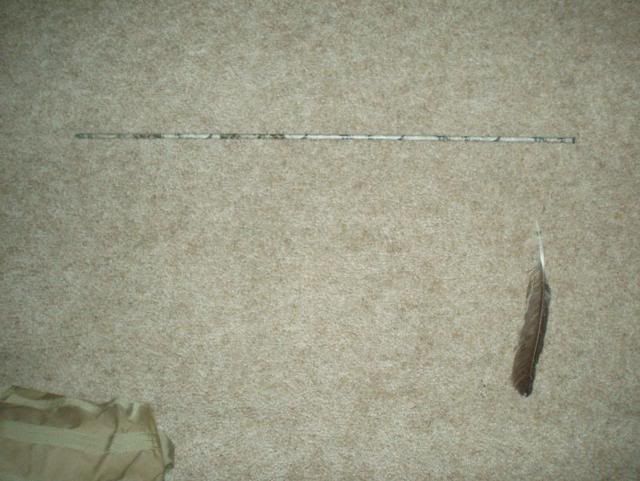
So with all of that said, what is a decoy that is easy to use, easy to carry, doesn't rely on batteries, and is inexpensive? The feather decoy! Year after year my feather decoy continues to prove itself in the field, drawing predators of all shapes and sizes close-in for the kill. They can also be used as a wind indicator while walking and while on stand. Store bought feather decoys are available, but why buy one when you can make one for cheap?

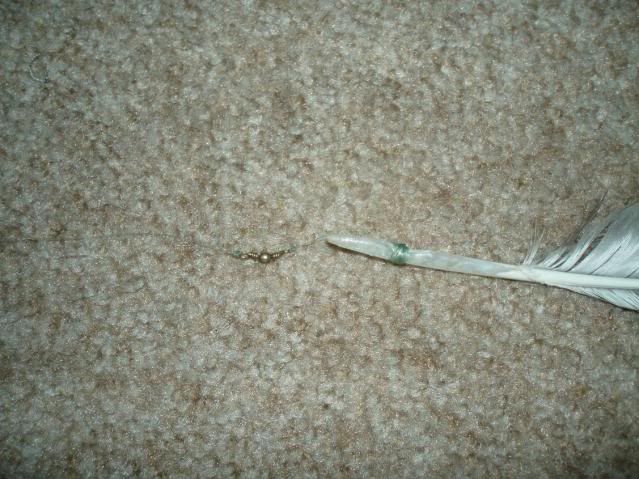
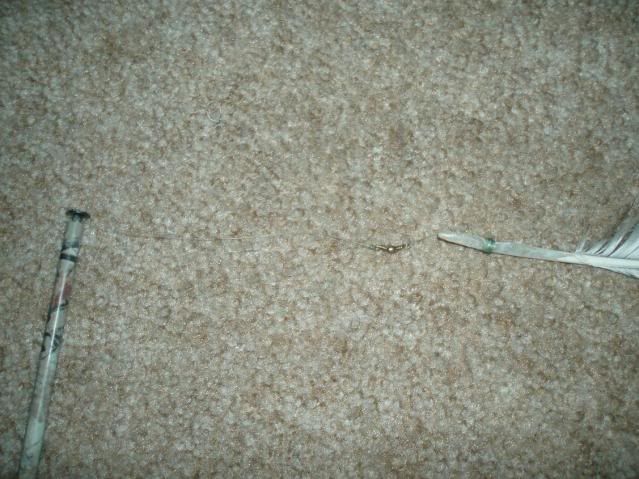
The decoy in this picture is about 2 1/2 years old and has seen literally hundreds of stands with no issues.


I have seen some homemade feather decoys with a bunch of feathers on them - not a good idea. When it comes to decoys too much movement is actually bad, as it tends to put predators on alert and can even scare away foxes and young yotes, as mentioned above. All you're after is enough movement to keep their focus off of you, and give them something to lock onto so that you can keep them visually engaged. Here's how I put mine together:

-Take a carbon fiber arrow, preferably already camo. You can buy these for $3 or so when Wal-Mart puts them on clearance at the end of archery season.

-Cut the fletchings off, then paint over that area and any manufacturer labels with some spray paint.

-Take out the nock insert and put in a threaded insert, the same as used for the business end.

-Put a field point on the business end with some loktite on it to keep it from unscrewing with repeated use. Sharpen up the field point for best results.

-Put a wide head screw into the other threaded insert, then tie a length of mono line onto it. Put some super glue on the knot.

-Tie a fishing swivel onto the free end of the mono line - this will keep the line from twisting and binding while it blows in the wind.

-Take your feather (I prefer turkey feathers, but chicken feathers or even heavyweight craft feathers work well) and using a thick threading needle from your wife's sewing kit (shhh! don't tell her), thread some mono line through it. Now stick it through the shaft of the feather, poke it through the sidewall a couple of inches in, pull some slack through, tie it around a lot, then glue it as well.


-Tie the other end of that mono line to the swivel. You don't need a lot of line blowing in the wind, 12 inches or less total length will do. Anymore and it just gets caught up on stuff. When you use your feather decoy, stick the arrow end into the ground at an angle on the upwind side - this gives the feather more room to blow and keeps it from getting wrapped around the arrow.


Now you have a perfectly functional and lightweight decoy that does not require batteries, and should you forget to pick it up on stand, lose it in the field or give it to a begging hunting partner you'll only be out a couple of bucks. It's also easy to repair should anything wear out or break. You can also make this same setup using an alligator clip instead of an arrow, and then clip it on to trees and bushes, but be warned: this allows the feather to get caught up A LOT in the leaves and such.

Where I live the wind is a constant factor so it's not hard to get the feather moving. If it's a relatively calm day don't worry - it does not take much of a breeze to get this feather moving, and a little movement is all you need. So stick your new feather decoy into the ground, lean back into some cover, start your calling, and watch the animals come in - drawn to your decoy like a magnet!

Thursday, April 1, 2010

Clinic Discount!

Anyone who participates in the Shave Off for Jack or donates at least $25 via the link on his Blog can attend the Clinic for only $20, that includes this weekend's Field Day or the next Clinic in July. Anyone who donates $50 or more to Jack gets a Clinic free of charge.

Wednesday, March 31, 2010

Shave-off for Jack!

Jack is a courageous 3-year-old kid who is currently battling neuroblastoma . He is a real trooper and is fighting the good fight, but he needs our help! Join me April 10 as I shave it off for Jack! Scott, Jack's uncle, has a message to share with everyone, and below that you'll also find a couple of flyers for this once-in-a-lifetime event. Be there and get bald - even my 6-year-old son has agreed to shave it off for Jack.
Jack has a Blog where you can find more information about this great kid, and a PayPal link where you can donate and support the good fight!
Click here to goto Jack's Blog!

****

DATE: Saturday, April 10, 2010; 2pm to 6pm
LOCATION: Loco Patron, Scottsdale, AZ
SPONSORS: Loco Patron & Adrian Wilson Foundation

Summer is almost here and what better way to start the season then with the coolest haircut around.... the baldy! For only a $20 donation, guys, and maybe some girls (yes, we have a few thinking about it), can get their bald on. For only $10 more, our celebrity barbers, Cardinals players Adrian Wilson and Steve Breaston, will have your head looking as sharp as the pros! You'll also leave with a t shirt that you can wear in honor of Jack! Also, we are raffling some cool prizes to give away as well; 1 ticket for $10 and 5 for $40 and we promise you'll be very impressed with the raffle prizes. T shirts are available for individual purchase as well, all going to the benefit of Jack to help him fight this cancer. Join us for an afternoon of fun, help take the load off the parents mind for an afternoon and show your support. ALL proceeds will go directly to the costs of Jack's care. If cash is tight or you don't want to shave your head, you're welcome to come regardless; grab a t shirt, a cold beer or an iced tea and a few snacks... just being there is support enough.

Make-A-Wish is coming on board to help sponsor/support but I can't list them now as the details are being ironed out. Lastly, Eagle Rider motorcycle rentals is also going to be sponsoring in some fashion and they're working on getting a ride put together to raise some money and maybe tying it into arriving at Locos. We're very pleased with how it's coming together.

-Scott

Tuesday, March 30, 2010

Coyote Clinic students continue to drop fur!

It's so great to see guys getting out and putting what they have learned to the test - and then dropping coyotes as a result! Here are some more pictures from guys who attended the Coyote Clinic, got out into the field, and started putting more fur on the ground.


Wednesday, March 17, 2010

Blue jeans and a gray coat

Earlier this week I was headed down the highway with my hunting partner Kelly and our friend Tanner. As we cruised down the road, all three of us became fixated on a beautiful canyon off in the distance. Filled with rocky ledges and deep draws, we were sure we could get a fox to come and visit us. Luckily we all love to hunt, so we carry our hunting gear with us - just in case. We were able to find a sideroad that took us well away from where others could easily get to - 4 wheel drive was required. We stopped a few hundred yards from the edge of the canyon ledge and hiked in.

Now when I say we carry our hunting gear with us, I don't mean all of it - just the basics. I almost always wear a camo hat, and I can put my shotgun, calls, facemask, and a camo shirt in a rifle case. My two companions had similar setups, but we all sported blue jeans, which meant we'd have to find good cover. This goes to show that good cover, sitting still, and a little shade go a long way when it comes to camouflage.

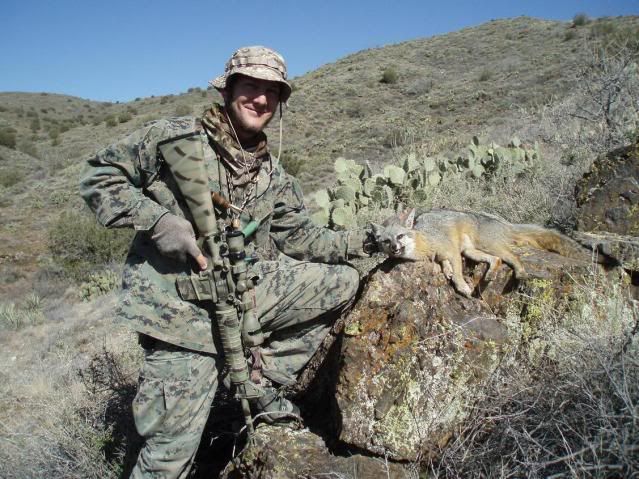
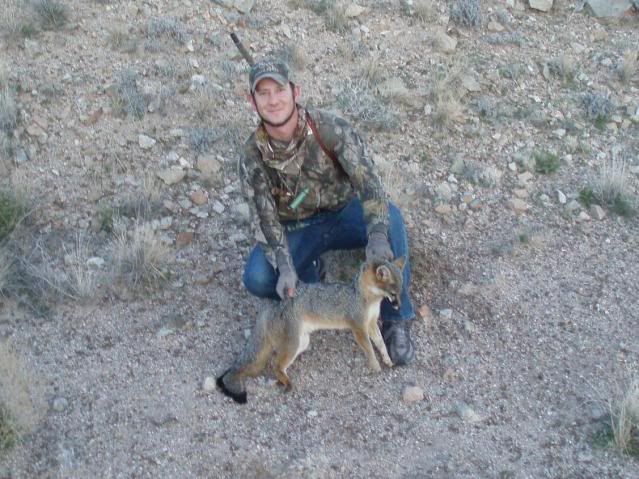
I sat at the edge of a draw that overlooked the canyon, and Kelly and Tanner sat to either side of me, fully capable of taking anything that might try to flank me. The sun was already starting to sink low in the sky when I began my call, but about 6 minutes into the stand Kelly spotted a gray fox headed right for me. Let me tell you, this is when you know you have a hunting partner who is a team player! Kelly had a few decent, but not great, shot opportunities on this fox. But since the fox was continuing to approach the call, Kelly let him go knowing that at close range the fox would definitely not escape my shotgun. A minute or so passed before the fox came into my view, and at 20 yards it was a good shot. He was a nice big male, and we were very glad that we'd had our gear, kept our eyes open, and made the effort.