Tuesday, November 5, 2013

Coyotes Attack Man on Mower - are they getting bolder?

Here's an interesting story where 4 coyotes attacked a man, seemingly unprovoked, while he was on his riding lawn mower: http://fox8.com/2013/11/01/residents-warned-of-pack-of-coyotes/.

Coyote attacks on humans, especially those that are unrelated to rabies or starvation, are becoming more common, and the number of involved coyotes is also increasing. Whereas you used to hear about a single, or maybe a pair, of coyotes attacking a small child in a backyard or a playground, now there are attacks such as the one in Ohio (linked above) where 4 coyotes attacked a grown man on a lawnmower in broad daylight.

A coyote trots across an urban road while a child plays in her yard in the background.

In areas where coyotes are rapidly spreading, such as the midwest and the eastern states, there is little being done to stop them. Hunting is more difficult and less productive in the thicker forested areas and underbrush of states east of the Mississippi River, and in some cases the coyotes have been breeding with eastern wolves, making them larger and more aggressive. Combine all of that with a small prey population and more dense human populations and you have a potential problem.


Coyotes in a subdivision in Littleton, Colorado.

Even here in the western states coyote overpopulation is a problem. Damages to antelope and deer populations are easily seen and we certainly have our share of attacks, though with our large open spaces and greater prey populations, the attacks are rarely food motivated. My point to all of this is that the need for predator population control must go well beyond hunting, which accounts for a VERY small percentage of the overall control effort, and people have to get serious about self-protection as well as management of animal populations. We're stewards of this planet, after all, and we're human beings with opposable thumbs, for crying out loud - so we'd better start acting like it. You can cry for the animals if you'd like, but they won't stop eating you just because you care about them.


Happy Hunting!

Thursday, October 31, 2013

Up Close and Personal Bobcat with Switchback Outdoors

I have nothing to do with this video other than the fact that I've experienced similar close encountered without having caught them on video. I've never had a bobcat this close, though!

It's one of the most exciting parts about using mouth calls, and that's when the animals come in they are coming straight for you!

[ I couldn't get this video to embed, so you'll just have to click on the link. ;-) ]

http://youtu.be/cfhK5HPFkdA

Happy Hunting!

Thursday, October 24, 2013

Coyote Clinic graduate dumps his first coyote!

It's no secret that Coyote Clinic graduates put more fur on the ground once they've completed the 2 day course, and here is another picture that is proof to that. I'll let the hunter, Tyler, tell his story:

Congrats to Tyler on his first coyote!

"I went out after work yesterday for an hour and within 2 min on the first stand had a yote come blasting in on my left at around 5 yards and a shot with #4 buck put him down quickly. 2nd stand didn't see anything and on the third we had another one come in behind me (I could hear him) and my buddy took a longer shot then he should have and missed.  It would have been perfect for an AR, but we had shotguns and he should have waited for him to get a little closer.

Thanks for putting on a great class. I learned a ton and its nice to actually use that knowledge."

Thank you for attending Coyote Clinic, Tyler, and even more, thank you for going out into the field and doing some hunting. My studies have shown that those who get out and actually hunt will kill 100% more predators than those that sit around just talking about it!

Happy Hunting!
Monday, October 21, 2013

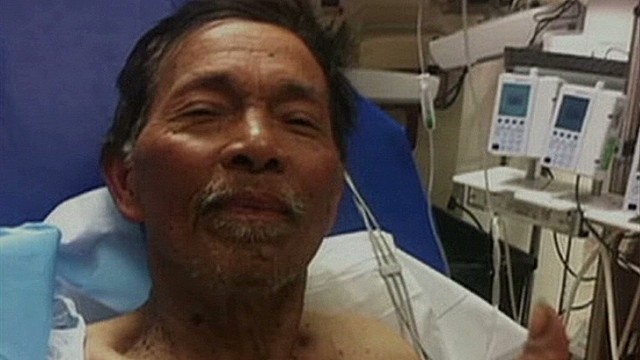
72 year old man survives nearly 3 weeks lost in the wilderness

Gene Penaflor - someone to look up to and learn from

This should be a lesson and a reminder to all of us who call ourselves 'experienced' or 'skilled' in outdoor survival: all of the tools and all of the skills in the world are nothing without the mindset to survive.

http://www.grandviewoutdoors.com/articles/3038-video-72-year-old-man-survives-wilderness-on-frog-and-squrriel-diet#sthash.MDU0zoQS.dpbs


Happy Hunting!

Thursday, October 17, 2013

Early Morning Hunting = four coyotes on stand before breakfast

Early this morning before the sun came up, I was sitting under a bush overlooking a small field with the temperature hovering around the freezing level, listening to the sounds of a bird in distress echoing through the pre-dawn air. Two hawks would make a swipe at the decoy, realize it was not real, and then perch in a nearby tree, as if in some kind of protest. Ultimately this stand would prove fruitless for predators, and me and my hunting buddy, Bryan, would move on to another area.

The second stand had similar results - no hawks this time, but also no predators. It was 0700 and we both had to be back to work (though we both love what we do for work) around 0800, so we knew we only had time for one more stand. There was a subdivision not far away, and knowing that coyotes often hang out there during the night, hunting for pets and food garbage, and then make their way out of the subdivision early in the morning, we made a beeline for the edges of the populated area.

We setup our stand a good distance from the edges of the subdivision, so that we would be both legal and safe in our choice of hunting area. Bryan was on a small rise with his .17 HMR, overlooking a high-walled wash that was choked with brush on either side. I sat down in the wash itself with my shotgun, looking straight down the "lane" of the wash, with Bryan and the FoxPro caller about 40 yards in front of me and to my right. Bryan was running the remote, and within just a few minutes of starting the stand with some bird distress, there was 1, then 2, then 3 coyotes coming down the wash, straight towards me. I spotted them about 100 yards out, and wanted to let them get close enough to ensure a good shot with my shotgun as well as make sure that Bryan could see them. When the first coyote was within a few yards of the decoy I fired my first shot . . . . and things happened pretty quickly after that!

I didn't have a good cheek weld on my shotgun for the first shot, despite having a lot of time to prep for it - we all make mistakes! I started with the lead coyote, figuring I would work from the front to the back and Bryan could work from the back to the front and we'd probably get all 3 coyotes, but my first shot was high due to the bad cheek weld. I quickly worked the action on my shotgun, fixed my cheek weld, and put the second round into the coyote before the dust had even settled from the first shot. Coyote #1 hit the dirt hard so I swung to coyote #2, who was trying to put on the brakes but not before I had racked another round into the shotgun and helped that coyote stop for good - and coyote #2 was down. By this time, Bryan had found fur in his scope and put a round in the direction of coyote #3, but the shot wasn't solid and the coyote made a break for the thick brush, which it reached before I could get a bead on it. I fired a round of buckshot into the brush where I could see the outline of coyote #3, but the thick brush is unforgiving when you're trying to put effective shots through it - I'm not sure if I hit coyote #3 or not.

2 out of 3, not bad for a morning hunt
All of the shooting was over in just a few seconds, with two coyotes down for sure and one unknown. Bryan kept the call going, and after a few minutes made the signal that the stand was over. I whistled to him that I was getting up, but when I looked over he was giving me a hand motion to sit back down! A few more minutes passed when Bryan gave the all clear again, and then informed me that there had been a coyote directly behind him! Obviously he didn't get a shot on it, and it busted him and ran off when he turned to see what was there.

We recovered the two coyotes that were laying dead in the wash, but could not find blood or fur from coyote #3. We searched for a while, but other than buckshot marks on some bushes from my attempted shot through the brush, we didn't find any sign that we'd got a good shot on #3, so we called it a day and headed home.

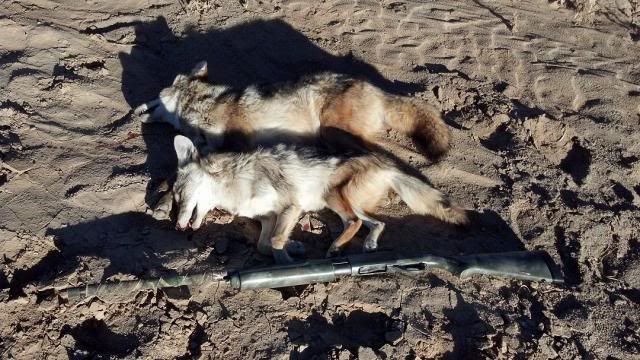
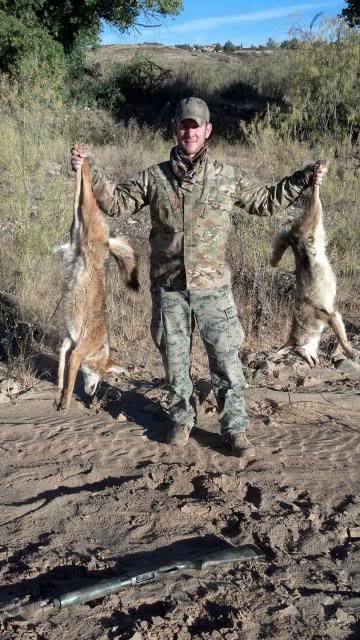
Four coyotes on stand with two of them on the skinning rack, all before breakfast

If you've been having a hard time finding the time to go hunting, consider some early morning "pre-work" hunting or an "on the way home" hunting trip. I've killed a lot of predators over the years with those kinds of stands, especially when you combine them with hunting in areas that are close to populated areas, just be sure of your local laws!

Happy Hunting!
Monday, October 14, 2013

Rabid Bobcat attacks men near Prescott Valley


A rabid bobcat attacked two men last week near Prescott Valley, AZ while they were out quail hunting (read the full story HERE). It had been acting a little suspicious, primarily by not being scared of them when they first saw it, which can be a tell tale sign of a potentially rabid animal. Through they were eventually able to kill the rabid bobcat, both men were injured with lacerations, punctures, and scratches to their heads, necks, backs, arms, and legs, but they were later treated for their wounds, including rabies, and will make full recoveries. Here in Northern Arizona, it seems that our rabid animal attacks usually revolve around gray foxes, bobcats, and mountain lions, so it's especially important to be wary of those predators when you encounter them in the wild. We can't forget the bobcat who walked into a bar in Cottonwood, or the mountain lion who was whacked with a frying pan near Bloody Basin. And of course there's the gray fox who bit the woman while she jogged near Granite Mountain, and then the fox was then held in place on that very arm by the victim as she ran back to her car, threw the fox in the trunk, and then drove to the hospital for treatment. There are even more wild stories about rabid animals attacking people in Northern Arizona that I could share, but let's take a look at how to spot and deal with rabid animals, instead:

  • Be wary of animals who are acting odd, such as wild animals who are not afraid of you, nocturnal animals who are out during the day, or bats who are laying on the ground. Rabid animals will sometimes appear almost "drunk" as they struggle with balance and coordination.
  • During the early stages of rabies, rabid animals usually act aggressive towards just about anything - I have personally watched a rabid gray fox attack a pine tree. Be ready to defend yourself with any tools you have at your disposal, including your bare hands, rocks, big sticks, knives, backpacks/purses, and of course, firearms.
  • During the last stage of rabies, which is just before death, rabid animals may be also uncharacteristically timid or lethargic, such as a domestic pet who hides from you, won't let you pet it, or won't get up or move around.
  • Rabid animals do not "foam at the mouth" like they do in the movies, and even if they do, it's not nearly as dramatic. That being said, rabies is transmitted through saliva, and the reason that it is reported that rabid animals "foam at the mouth" is because the throat and facial muscles become paralyzed in the later stages of rabies, which means that the infected animal cannot swallow.
  • Report any rabid animals, dead or alive, to your local Game and Fish department. DO NOT TOUCH rabid animals, especially without protective equipment.
  • If you've been bitten by an animal, wild or domestic, immediately wash the wound with soap and water and then get treated for rabies at the nearest emergency room. An animal does not have to be "rabid" to transmit the rabies virus. If possible, capture or kill the animal that bit you so that it can be tested for rabies.
  • Rabies is a deadly disease, and the most commonly infected animals in the U.S. are bats, raccoons, skunks, foxes, and coyotes. The most common domestic animal rabies infections come from cats, which are nearly double that of domestic dog infections.
  • Get your pets vaccinated! Even your horses and other livestock can get rabies, which will kill them if they are not properly vaccinated, as well as potentially spread the virus to other animals.


Be safe out there, and Happy Hunting!

Tuesday, October 8, 2013

Coyote Clinic 2013 - another successful event!

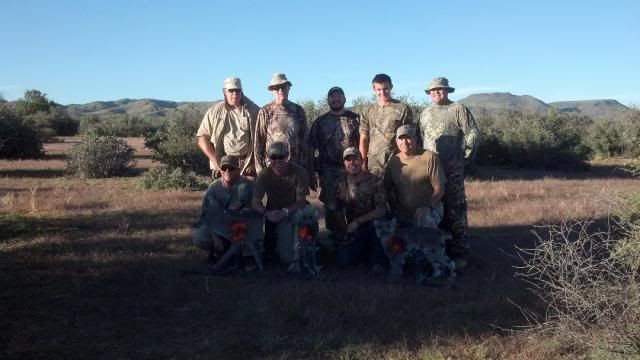
A great group of hunters, ready to put some fur on the ground

Call sequence, scouting, stand selection, animal skinning, snap-shooting . . . . Coyote Clinic was again a great learning opportunity for everyone involved, including myself - every time I teach something I learn something! Once we got the classroom wrapped up on Saturday night, we got to apply that knowledge on Sunday with some beautiful weather for the Field Day.

I look forward to hearing back from these hunters on how their future hunts go, and posting some success stories up here on the blog!

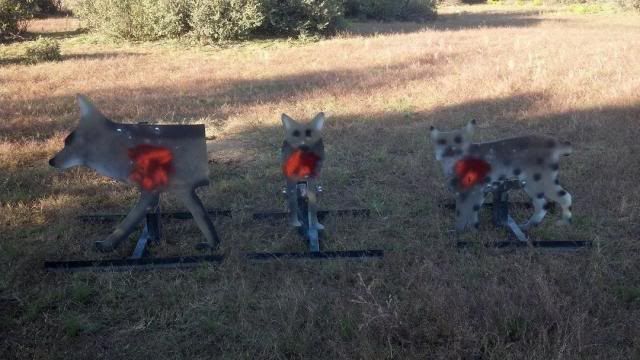
During the snap-shooting exercise, we had the opportunity to test out some new prototype targets from ShootersElement that were designed just for the Coyote Clinic, and they will be for sale very soon! These AR500 steel targets of two different coyotes and a bobcat can handle any centerfire caliber (other than .338LAP and .50BMG) and make hunting practice fun and exciting. They replaced the old plywood and mild-steel targets that we used in the past which could only handle rimfire. I moved to the AR500 targets due to student feedback - I really do listen to my students.

Custom paint job by yours truly with some good ol' spray paint

Are you interested in attending a Coyote Clinic to learn more about putting fur on the ground? Stay tuned to this blog, or email me at Glen@IndependenceTraining.com for more information or to get a Coyote Clinic scheduled in your area!


Happy Hunting!


Close Quarters Hunting . . . . and Bagging a Gray Fox for Coyote Clinic

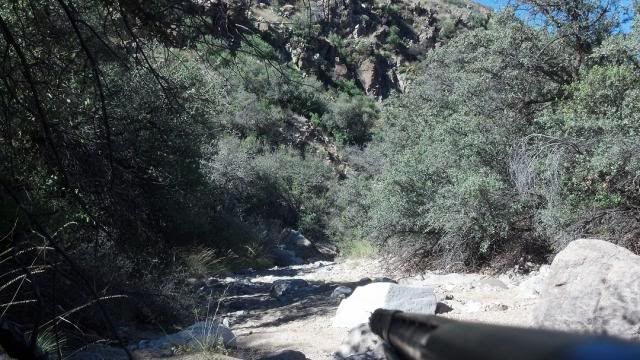
If you've followed this blog over the years, attended one of my Coyote Clinics, or been out hunting with me, you'll know that I prefer close quarters hunting. Most of the predators that I kill every year are shot inside of 50 yards, and a lot of those are inside of 50 feet. I usually get this done with my Remington 870 shooting Remington 3" #4 buckshot through a Remington Xtra Full choke. Why do I enjoy the close quarters hunting so much? Here's a short list:

  • Predators feel more secure in an area where they can approach more closely and not be seen
  • Predator numbers are usually higher where there is more ground cover
  • The hunting action is fast paced and more exciting
  • Most hunters are not willing to make the long hike or crawl through the thick brush to get to these locations, which means that the animals are less educated to predator hunting sounds

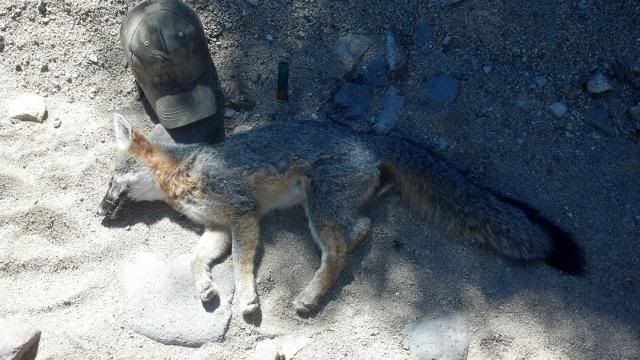
A gray fox is laying in the shadows at the end of my shotgun barrel

At every Coyote Clinic we do a skinning demonstration, and do I headed out for some predator hunting a few days before the most recent session. After a long morning of hunting coyotes in the cedar flats with no success, I decided to switch to some thick cover calling after lunch. I hiked and crawled back into a canyon that was choked with thick brush until I was able to find a small opening. I checked my watch and it was 14:14, then I fired up the call. Based on my experience with thick cover calling, I knew to be ready to shoot before starting the call, and for this stand that paid off well. It seemed less than 30 seconds had passed before a gray fox came tearing towards me, and after I shot her and did a quick check of my available line of sight, I looked at my watch - it was 14:15. Less than a minute had passed before this fox was on stand, and that is typical of thick cover calling, especially when foxes are involved.

This gray fox was on stand in well under a minute while hunting the thick brush.

I continued to call that stand for another 9 minutes, and when nothing else showed, I packed it up and headed back to the truck. I had the animal I needed to skin for the Coyote Clinic, and it was time to head home. If you're looking for a way to increase your predator numbers, consider getting into the thick brush, but don't forget stealth! Animals nearby are usually very close nearby, so don't go tearing through the bushes like a Sherman tank. And be ready to shoot before you start calling!

Happy Hunting!


Thursday, August 15, 2013

Coyote Clinic 2013 - Sept 28 and 29


Coyote Clinic is back for 2013! September 28 and 29 in Prescott Valley, AZ, and this session will be better than ever! Click the picture below for a larger version of the info sheet with all of the class information and details.

Don't wait until the class fills up - Register today!


Coyote Clinic graduates have more success in the field! Check out this post from back in January: http://rizzoisready.blogspot.com/2013/01/first-fox-turns-into-triple-fox.html

And read a little about our last Coyote Clinic, back in May 2012, by going here: http://rizzoisready.blogspot.com/2012/06/coyote-clinic-2012-round-2-success.html


Happy Hunting!

Tuesday, August 6, 2013

The Skull Cleaning Process in Pictures

Several people have asked me over the years about the cleaning process, so here it is in pictures. Let me know if you have any questions! This is a self-taught process that I learned through trial and error, so there may be better ways to do some of these steps - but this is how I do it.

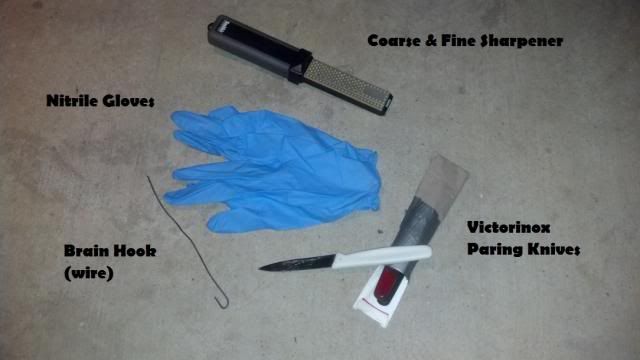
Skulls generally show up to me with the hide off (not always), but there is usually some fleshing to be done. The beetles will eat everything, including the hide, but it takes more time and makes the smell unmanageable. Fleshing includes removing any large sections of meat, the tongue, the eyes, and the brain. Here are the tools that I use:


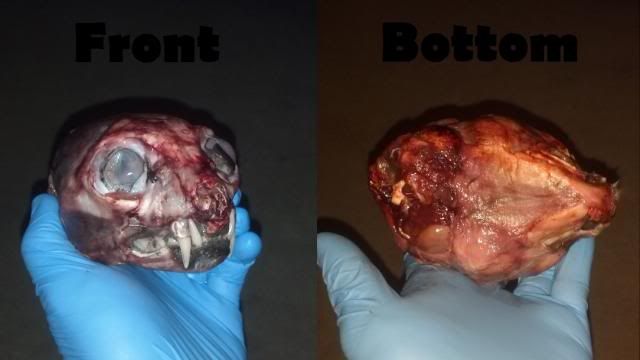
Here's a fresh bobcat skull ready to be fleshed - it's really important to make sure that the knives are sharp before starting, especially the tip of the knife as that will be used the most:


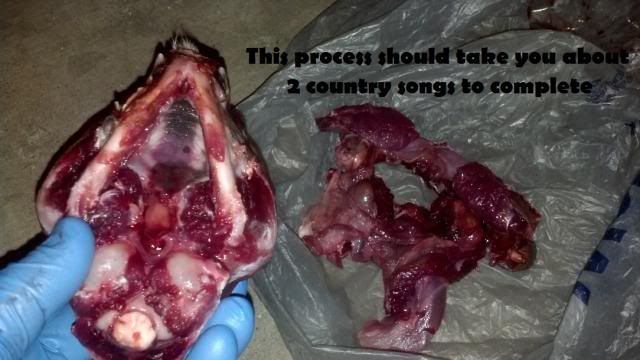
I listen to music while I clean skulls (thanks Pandora!) so a skull this size should be done in about 2 country songs or less once you get the hang of it - the more you can keep the 'meat' in one big chunk, the easier is it to get off of the skull:


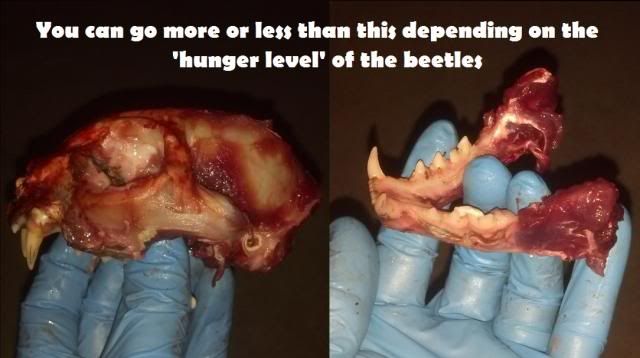
I don't always flesh down to this level, it just depends on the feeding cycle of the beetles and the size of the skull - after this I remove the brain with a brain hook made from a regular piece of wire, which for this size of skull is about another 2 country songs:


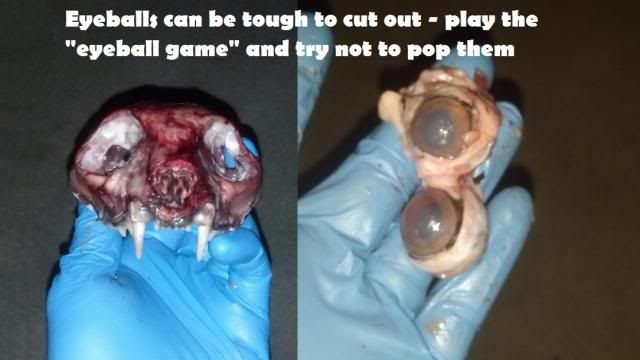
Eyeballs are surrounded by muscle so they are tough to get out until you know exactly where to cut (tip: remove the jaw and then cut the main muscle from underneath) - I like to play the "eyeball game" and try not to crush or pop them, and then they can be used as science projects for the kids!


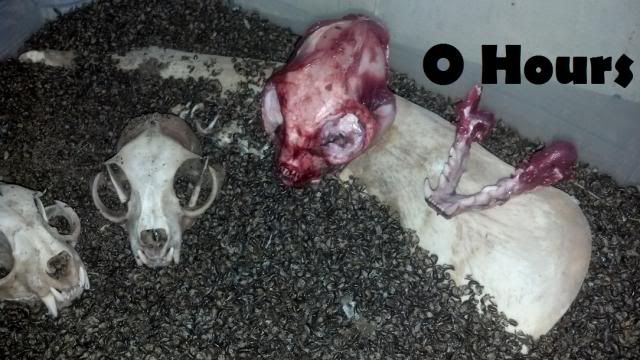
The skull is ready to be cleaned so it goes into the beetles - there are already 2 cleaned bobcat skulls in there, and the new skull is resting on a bison lower jaw that is like an amusement park for the beetles:


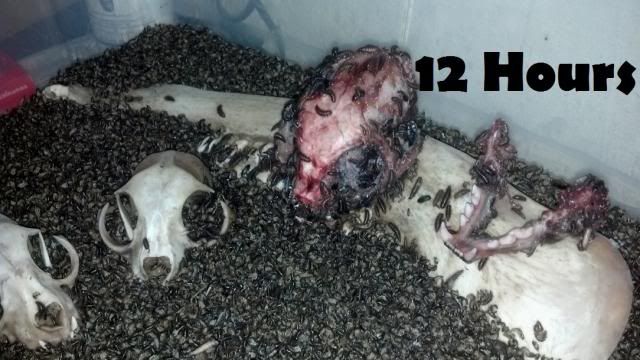
12 hours later the beetles have made a big dent in the meat - notice how much the already cleaned skulls sank down in the beetle dander from all of the movement of the beetles:


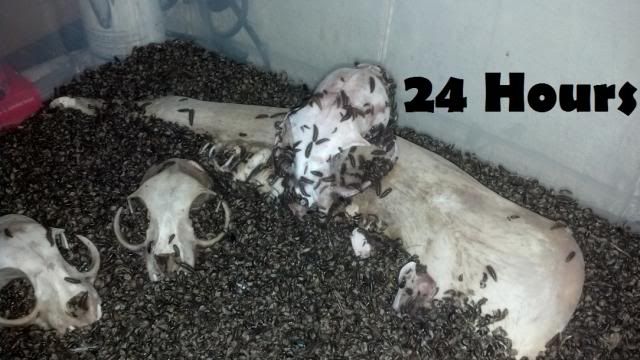
24 hours later the skull is totally clean - the beetles are so ferocious (but gentle) that the lower jaw slid down into the dander:


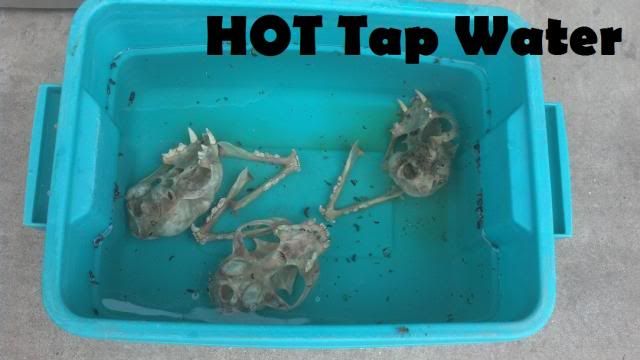
I put some fresh meat in the beetles to pull as many as possible from the skulls, then shake the rest out of and off of the skulls, and then submerge the skulls in HOT tap water - this will make sure that all of the little ones and the beetle eggs are killed so they don't pop out later:


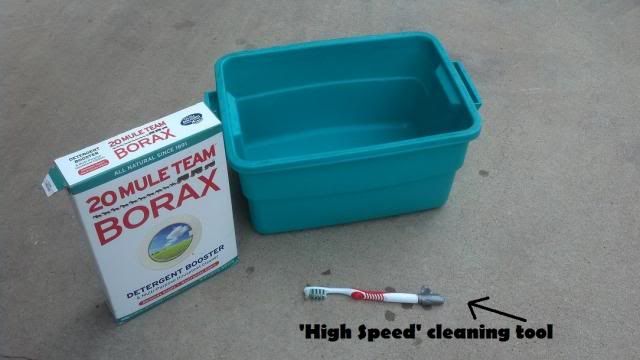
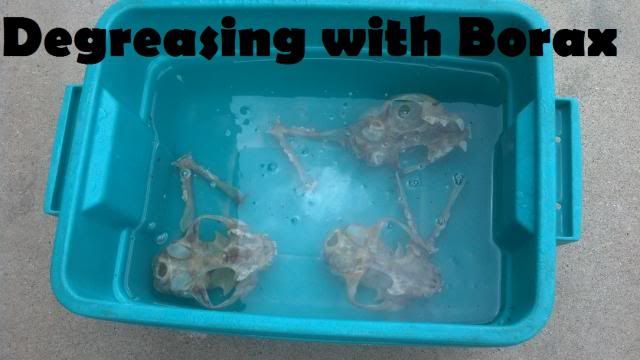
Now it's time to degrease the skulls - they are removed from the HOT water after only a few minutes and scrubbed lightly with my specialized high speed cleaning tool before being put into a mixture of Borax and water:


Here are the bobcat skulls degreasing, and they will stay in here for 3-6 days, depending on the animal - for bobcats it's only about 3 days:


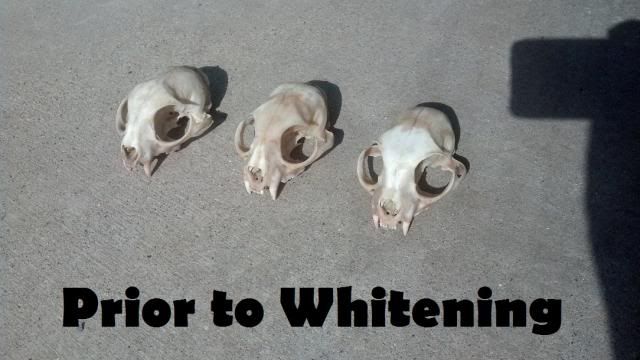
Skulls are removed from the degreasing water (which is NASTY by now) and are ready for whitening - this is what they look like at this point:


I use 40 Volume peroxide (purchased from a beauty supply store) for whitening skulls - you can use lesser Volume, but 40 works the fastest:


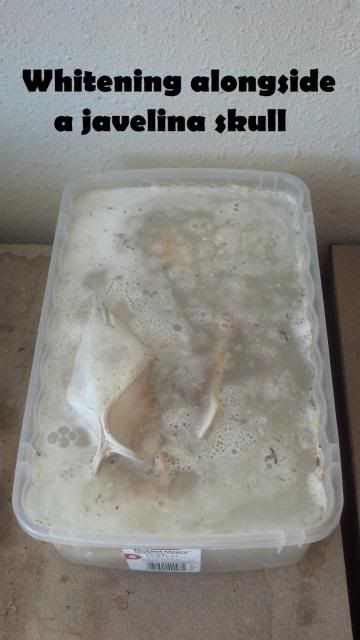
The skulls go into a tub with about 75% peroxide and 25% water, and how long they stay in depends on the color of the skull and what kind of 'look' is desired after the whitening process is complete - the bubbles mean it's working!


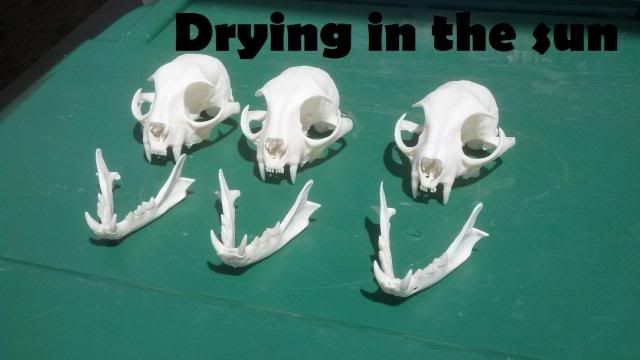
After 5 days in the peroxide the bobcats are removed - here they are drying in the sun, which I like to do for 2-3 days before considering them "complete", as it gets rid of any smell and makes sure that everything it nice and dry:


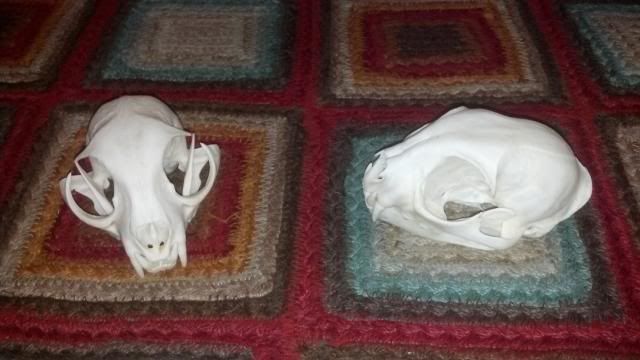
A few quick hits with the air hose to make sure that any dead beetles are removed from tight spaces and Voila! - the skulls are ready for display:


Happy Hunting!